|
|
|
|
|
 |
|
|
|
|
|
|
|
|

Group Captain Hugh Verity DSO* DFC
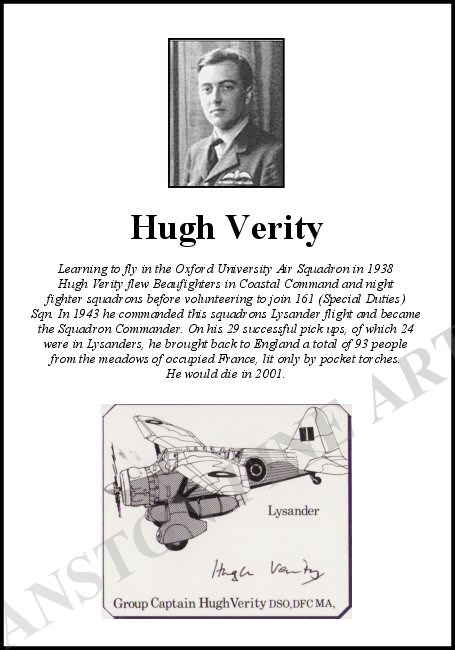
Learning to fly in the Oxford University Air Squadron in 1938, Hugh Verity flew Beaufighters in Coastal Command and night fighter squadrons before volunteering to join 161 (Special Duties) Sqn. In 1943 he commanded this squadrons Lysander flight and became the Squadron Commander. On his 29 successful pick ups, of which 24 were in Lysanders, he brought back to England a total of 93 people from the meadows of occupied France, lit only by pocket torches. He died in 2001.
 | |  |
| Distinguished Service Order | Bar to the Distinguished Service Order | Distinguished Flying Cross |
| Group Captain Hugh Verity DSO* DFC - Signed Aviation Art |
|
|
| Text for the above items : |
Clipped Signature - Hugh Verity Learning to fly in the Oxford University Air Squadron in 1938, Hugh Verity flew Beaufighters in Coastal Command and night fighter squadrons before volunteering to join 161 (Special Duties) Sqn. In 1943 he commanded this squadrons Lysander flight and became the Squadron Commander. On his 29 successful pick ups, of which 24 were in Lysanders, he brought back to England a total of 93 people from the meadows of occupied France, lit only by pocket torches. He died in 2001. |
They Landed by Moonlight by Robert Taylor. To fly a small aircraft at the dead of night, without radio communication or navigational assistance, deep into enemy-occupied territory, was an extremely perilous task. To then land on an unlit remote field, deliver secret agents, collect Resistance leaders, or downed airmen and fly them home without attracting the attentions of enemy night fighters, was appallingly risky work. Yet throughout World War II the prime function of the pilots of the RAFs Special Duties Squadrons was to fly time and again into occupied France, in utmost secrecy, under the cover of darkness. It was acutely dangerous work requiring inordinate flying and navigational skills, and supreme courage. Most suited to these clandestine operations was the rugged Westland Lysander, operations being conducted, weather permitting, during the moons fullest phase. Guided only by torch light, the pilot made a hazardous night landing into an isolated field at a pre-arranged time, trusting that agents on the ground had checked the field for cart tracks and loitering Gestapo. Every mission required ice cool bravery and nerves of steel. |
|
Contact Details |
|
Sign Up To Our Newsletter!
This website is owned by Cranston Fine Arts. Torwood House, Torwoodhill Road, Rhu, Helensburgh, Scotland, G848LE Contact: Tel: (+44) (0) 1436 820269. Email: cranstonorders -at- outlook.com
|
|
|